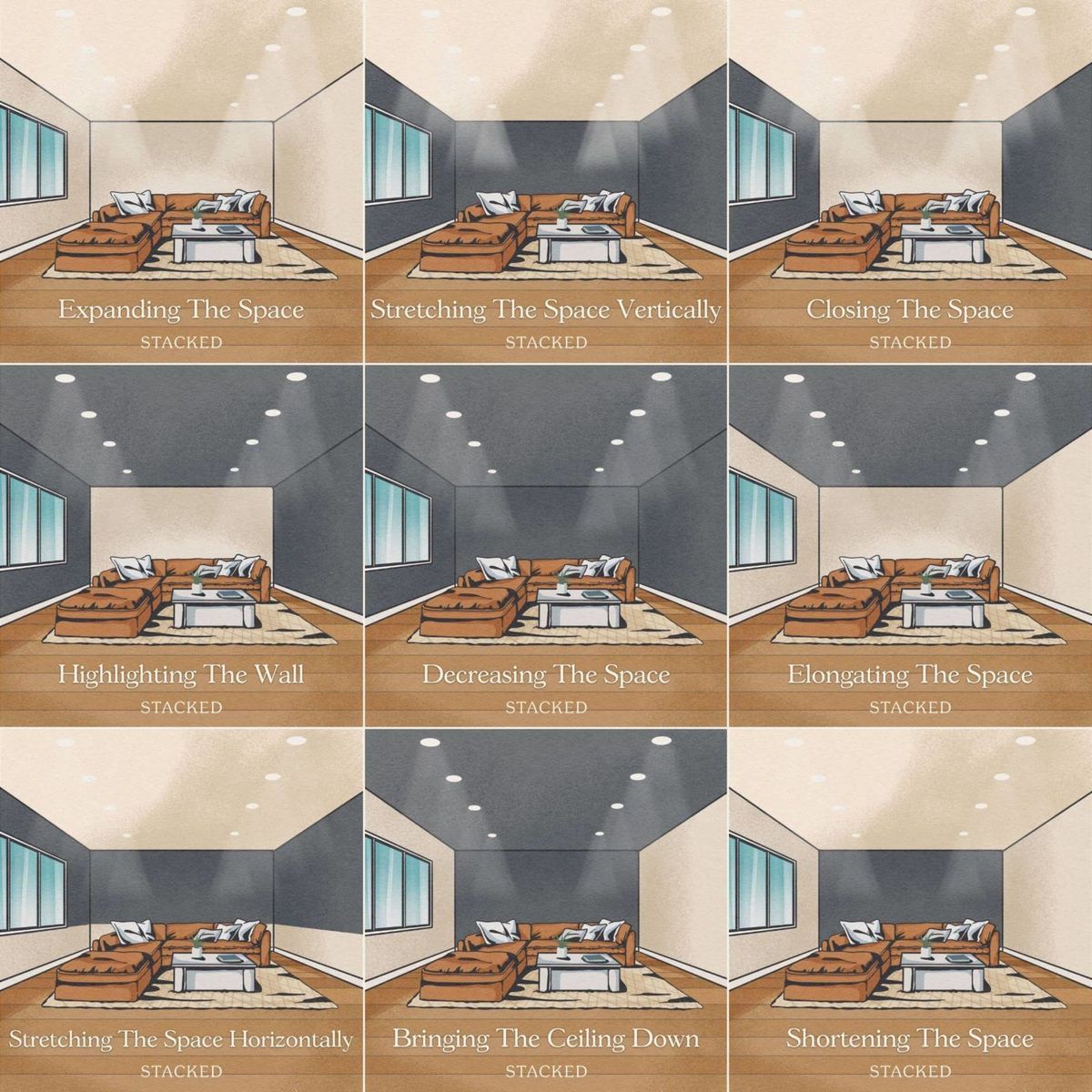
Color does far more than set a mood—it can completely reshape how you perceive a space. The illustration above breaks down nine powerful color-placement techniques that interior designers use to alter a room’s proportions without moving a single wall.
Below, we explain each technique and how you can apply it in your own home.
1. Expanding the Space
Using lighter tones on both the walls and ceiling reflects more light around the room. This reduces visual boundaries and makes the entire space feel wider and more open.
2. Stretching the Space Vertically
Darker wall colors combined with a lighter ceiling pull the eye upward. This increases the perceived height of the room—perfect for low ceilings.
3. Closing the Space
Darkening the ceiling and upper walls visually lowers the height of the room. This creates a cozy, intimate feeling ideal for dens, lounges, and reading spaces.
4. Highlighting the Wall
Painting just one wall a lighter or contrasting color draws attention to it. Use this technique to emphasize a feature such as a fireplace, bed wall, shelving, or artwork.
5. Decreasing the Space
Dark walls and a dark ceiling visually pull inward from all sides. This shrinks the perceived volume of the room—useful when you want a warm, cocoon-like environment.
6. Elongating the Space
A darker back wall contrasted with lighter side walls pulls the eye forward. This creates the illusion of a longer room—helpful for small living rooms or hallways.
7. Stretching the Space Horizontally
Darkening the long walls while keeping the end walls lighter widens the visual field. This is especially effective in narrow rooms where you want more horizontal breathing room.
8. Bringing the Ceiling Down
A darker ceiling makes the overhead plane feel closer, adding warmth and reducing the sense of vertical emptiness. Ideal for tall rooms that feel echoey or unbalanced.
9. Shortening the Space
A darker back wall stops the eye from traveling too far, visually shortening the room. This technique helps balance overly long, tunnel-like spaces.
Final Thoughts
Color is one of the most budget-friendly design tools for manipulating the perceived size and shape of a room. Whether you want to make a room feel taller, wider, shorter, or cozier, the right placement of light and dark tones can completely transform your home.
If you’re planning a remodel or new construction, incorporating these principles can help you create spaces that feel intentional, comfortable, and visually optimized.